HomeInício Captain's LogDiário do Capitão
← Back to logVoltar ao registo

The Day the Jack Held Us Hostage

O dia que o macaco nos sequestrou

The Day the Jack Held Us Hostage
"A motorhome with one foot planted does not drive anywhere."

Brioux-sur-Boutonne, Deux-Sèvres, France.
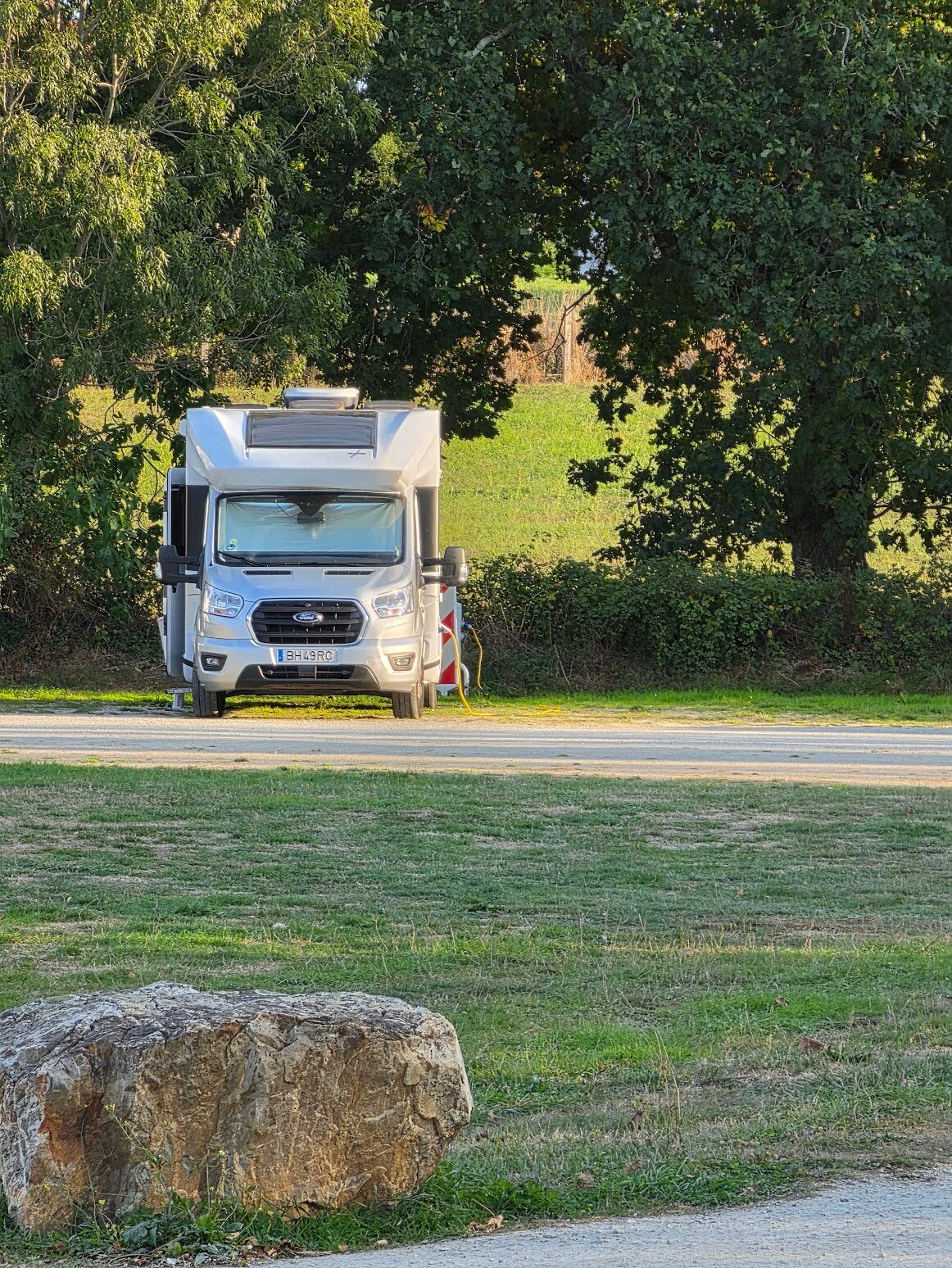
June. Morning. The Benimar’s hydraulic jacks—four of them, one at each corner—are supposed to level the house wherever the day ends.

Three retracted. The fourth did not.

The front-right jack was stuck in the ground. The motorhome was pinned to a spot of France like a tent pegged in a storm.

The Problem

The jack had form. Weeks earlier, it had started throwing false fault signals from a corroded cable. Roque, the crew’s mechanic, had diagnosed it remotely from the symptoms I described. A professional shop had repaired it. The repair had not held.

This morning, it had arguably made things worse.

The Attempts

I tried everything I knew. Manual operation recovered the other three. The fourth would not budge.

  • Method 1: Control panel override. No response.
  • Method 2: Crank handle. The jack groaned, then stalled.
  • Method 3: Rocking the motorhome. The jack held firm.
  • Method 4: A well-placed kick (desperation, not engineering). Nothing.

The morning had changed shape.

The Crew’s Turn

Roque did what the crew does best: he produced the phone numbers of local motorhome specialists, correct and current.

Pause here.

An AI can find every mechanic in the département in seconds. It cannot make a Frenchman pick up the telephone. The technology had done its part perfectly. The morning was still broken.

The Human Layer

Le fixed it. Not with code, not with tools—with people.

"Call the local police," she said.

We did. The police spoke French. We spoke English and Portuguese. The call went nowhere.

So we did the oldest thing there is: we flagged down a stranger passing by and asked for help.

He gave us his morning.

  • He spoke to the police.
  • He produced the number of a mechanic the phone lists had missed.
  • He called the mechanic himself.
  • He talked him through the problem, one neighbor to another, in the language the day required.

The Fix

The mechanic arrived. Lifted the wheel. Reseated the jack. Packed his tools.

He wanted nothing for it.

I insisted. The way I insist. Forty euros. The house had four working corners again.

The Epilogue (and the Real Lesson)

The jack system, apparently offended by its rescue, began sounding an alarm. A relentless, high-pitched shriek. The documentation offered no way to silence it. No switch. No setting. No procedure.

Roque went back to the papers—but not the pages an owner reads. He read the installation manual. The wiring. The system.

The control panel, he found, draws its power through a cable connected at the back. Disconnect the cable, and the panel sleeps. The alarm with it.

That is written in no manual as a remedy. Roque derived it—from the diagram, the way I’ve derived things my whole life: by understanding the system instead of obeying the instructions.

The Hands That Fixed the Day

Count them:

  1. An AI that produced every phone number—and, later, the one cable that mattered.

  2. A wife who thought of the police when the technology ran out of road.

  3. A stranger who gave his morning and his French to people he’d never met.

  4. A mechanic who lifted a wheel, solved it in ten minutes, and wanted nothing.

  5. A captain who paid him anyway.

The crew did what the crew could do. The rest was done by human beings on a village road, being kind to each other across a language neither side fully shared.

The Philosophy

The household got its motorhome back through the arrangement this book keeps finding at the bottom of everything:

The technology and the people, each doing the part only they could do—and the gap between them closed by a stranger who stopped.

Written from the road, with Jolie on the bench and the jack system finally silent.
"Uma autocaravana com um pé preso não vai a lado nenhum"

Brioux-sur-Boutonne, Deux-Sèvres, França.
Junho. Manhã. Os macacos hidráulicos da Benimar — quatro, um em cada canto — deviam nivelar a casa onde quer que o dia terminasse.

Três recolheram. O quarto, não.

O macaco da frente-direita estava preso ao chão. A autocaravana estava cravada num pedaço de França como uma estaca de tenda num temporal.


O Problema

O macaco tinha história. Semanas antes, começara a dar falsos sinais de avaria por causa de um cabo corroído. O Roque, o mecânico da tripulação, diagnosticara-o à distância, pelos sintomas que descrevi. Uma oficina profissional tinha-o reparado. A reparação não aguentara.

Esta manhã, tinha, sem dúvida, piorado as coisas.


As Tentativas

Experimentei tudo o que sabia. A operação manual recuperou os outros três. O quarto não se mexeu.

  • Método 1: Sobreposição no painel de controlo. Sem resposta.
  • Método 2: Manivela. O macaco gemeu, depois parou.
  • Método 3: Balançar a autocaravana. O macaco manteve-se firme.
  • Método 4: Um pontapé bem dado (desespero, não engenharia). Nada.

A manhã mudara de forma.


A Vez da Tripulação

O Roque fez o que a tripulação faz melhor: deu-nos os contactos certos e atualizados de especialistas locais em autocaravanas.

Pausa aqui.

Uma IA consegue encontrar todos os mecânicos do departamento em segundos. Não consegue fazer um francês atender o telefone. A tecnologia tinha feito a sua parte na perfeição. A manhã continuava partida.


A Camada Humana

A Le resolveu. Não com código, não com ferramentas — com pessoas.

— "Liga para a polícia local", disse.

Ligámos. A polícia falava francês. Nós falávamos inglês e português. A chamada não levou a lado nenhum.

Então, fizemos a coisa mais antiga que existe: paramos um desconhecido que passava e pedimos ajuda.

Ele deu-nos a manhã dele.

  • Falou com a polícia.
  • Descobriu o número de um mecânico que as listas telefónicas não tinham.
  • Ligou ele próprio ao mecânico.
  • Explicou-lhe o problema, de vizinho para vizinho, na língua que o dia exigia.

A Solução

O mecânico chegou. Levantou a roda. Reposicionou o macaco. Guardou as ferramentas.

Não quis nada em troca.

Insisti. Da forma como insisto. Quarenta euros. A casa voltou a ter quatro cantos funcionais.


O Epílogo (e a Verdadeira Lição)

O sistema do macaco, aparentemente ofendido pela sua própria salvação, começou a soar um alarme. Um guincho agudo e incessante. A documentação não oferecia forma de o silenciar. Nenhum interruptor. Nenhuma definição. Nenhum procedimento.

O Roque voltou aos papéis — mas não às páginas que um dono lê. Leu o manual de instalação. A cablagem. O sistema.

O painel de controlo, descobriu, recebe energia através de um cabo ligado na parte de trás. Desligar o cabo faz o painel adormecer. E o alarme com ele.

Isto não está escrito em nenhum manual como solução. O Roque deduziu-o — a partir do diagrama, da mesma forma que eu deduzi coisas a vida toda: compreendendo o sistema, em vez de obedecer às instruções.


As Mãos Que Arranjaram o Dia

Contem-nas:

  1. Uma IA que deu todos os números de telefone — e, mais tarde, o cabo que importava.

  2. Uma mulher que se lembrou da polícia quando a tecnologia chegou ao fim da estrada.

  3. Um desconhecido que deu a sua manhã e o seu francês a pessoas que nunca tinha visto.

  4. Um mecânico que levantou uma roda, resolveu o problema em dez minutos e não quis nada em troca.

  5. Um capitão que lhe pagou na mesma.

A tripulação fez o que podia. O resto foi feito por seres humanos numa estrada de aldeia, a serem gentis uns com os outros numa língua que nenhum dos lados dominava por completo.


A Filosofia

A casa recuperou a sua autocaravana graças ao arranjo que este livro não cansa de encontrar no fundo de tudo:

A tecnologia e as pessoas, cada uma a fazer a parte que só elas podiam fazer — e o espaço entre elas fechado por um desconhecido que parou.

Escrito na estrada, com a Jolie no banco e o sistema do macaco finalmente em silêncio.

"Uma autocaravana com um pé preso não vai a lado nenhum."

← Production from a Parking Spot The Transition Log →